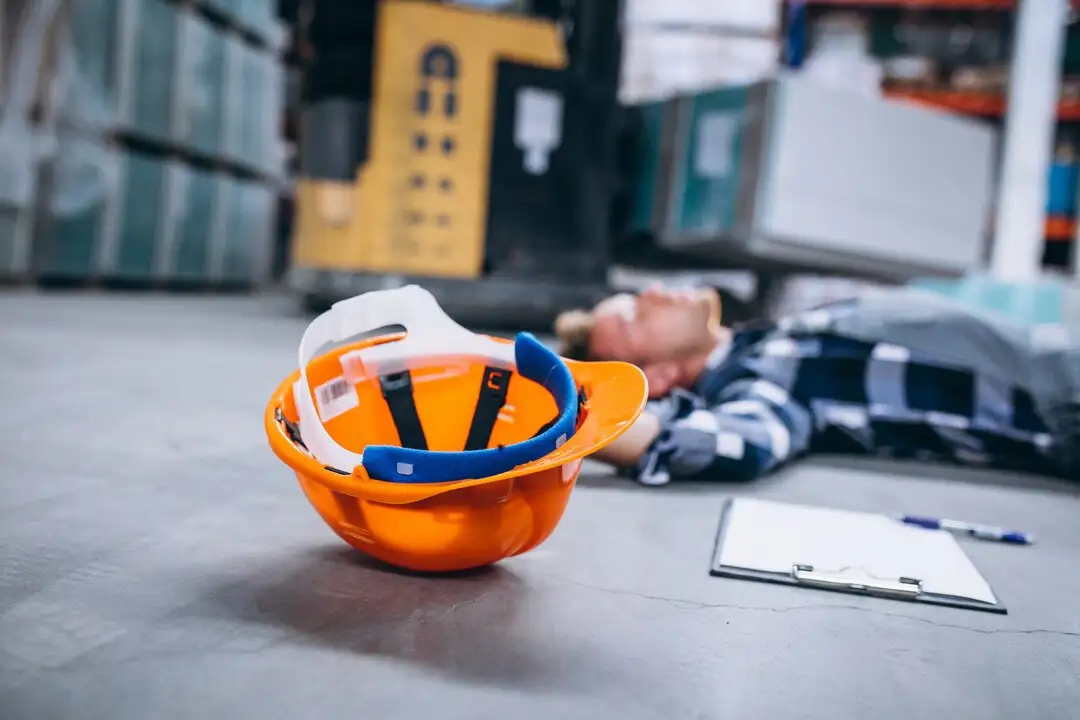
A business operating in Australia can be held liable for a public safety incident if a court finds it breached its duty of care under the Civil Liability Act framework. Liability turns on three things: whether the harm was foreseeable, whether the risk was more than trivial, and whether a reasonable operator would have acted differently. Public liability insurance premiums have climbed sharply in the past decade, and regulators are watching enforcement gaps closely. Businesses that document their safety systems and act on known risks early tend to fare far better when a claim lands.
A customer slips near a wet entrance. A scaffold gives way on a retail fit-out. A patron is hurt at a licensed venue during a busy Friday night. None of these events are rare in Australia, and each one can trigger a negligence claim against the business that occupied or controlled the premises. PD Legal works with companies across Sydney on exactly this kind of exposure, and the businesses that get hurt most aren’t always the ones with the worst safety record. Sometimes they’re just the ones with no paper trail showing they took the risk seriously.
This piece looks at how liability gets assessed, what’s driving the current spike in claims and premiums, and what sensible risk management looks like for a business operating in NSW.
How Does Australian Law Determine Business Liability for Public Safety Incidents
Negligence claims in NSW run through the Civil Liability Act 2002, and section 5B decides most of them. Anyone who occupies or controls premises owes a duty of care to people who lawfully enter the property. The harder question is whether that duty was breached. The Act sets a three-part test: the risk must be foreseeable, more than insignificant, and one a reasonable person in the defendant’s position would have taken precautions against. Courts have leaned on the second limb in practice. In a 2023 NSW Court of Appeal decision, compliance with common industry practice was treated as strong, though not decisive, evidence against a finding of negligence, and an occupier was found not required to remove every possible risk, only genuinely foreseeable and non-trivial ones.
Why Are Public Liability Claims and Premiums Rising So Quickly
Public liability premiums have risen 40 percent since 2015, a rate that outpaces general inflation, with the trend driven largely by a worsening claims experience since 2017. Bodily injury claims sit at the centre of it, growing 5.5 percent annually since 2013, with work injury claims doubling in size and psychological injury claims adding further pressure. It isn’t easing either. A 2026 survey found 70 percent of insurers reported increased claim costs and frequency, attributed largely to climate-related losses and inflation, with half planning to raise premiums.
The practical effect shows up in contracts before it shows up in court:
- Head contractors increasingly requiring subcontractors to carry $20 million in public liability cover
- Corporate clients demanding $10 million in professional indemnity before signing
- Government procurement setting minimum insurance thresholds smaller tenderers sometimes can’t meet
What started as a risk decision has become, for many operators, just the cost of staying in business.
What Industries Carry the Highest Liability Exposure
Construction tops the list by a wide margin. It generated the highest volume of insurance enquiries in 2025, with height-related work drawing particular attention, followed by beauty and wellness, retail, and hospitality. The reasoning is fairly intuitive. Industry classification is the single biggest driver of premium, bigger even than coverage limit, because insurers price risk against a trade’s claims history, and exposure rises with physical risk to others, whether heights, power tools, or high foot traffic. A home-based consultant and a scaffolding crew on a high-rise simply aren’t priced the same way.
How Should a Business Actually Manage Its Liability Risk
This isn’t a once-a-year paperwork exercise before renewal. It works best as an ongoing habit.
- Document incidents and near-misses as they happen, since contemporaneous records carry more weight than reconstructed memory.
- Match coverage limits to what contracts require, given the gap between $5 million and $10 million often costs only $80 to $150 more a year.
- Review safety systems against current industry-accepted practice, since courts weigh whether a business followed recognized standards.
- Build risk allocation into supplier contracts rather than leaving insurance to absorb every failure.
None of this guarantees a business avoids a claim. It does change how that claim plays out, because the section 5B test ultimately asks what a reasonable operator would have done.
Where Does Regulatory Enforcement Fit into This Picture
Exposure isn’t only about civil claims from injured individuals. Australian Clinical Labs was fined $5.8 million following a data breach, the first civil penalty under the Privacy Act, with the court signaling that the penalty sat at the lower end of the permissible range. Companies more broadly continue facing a wide range of class actions spanning consumer, employment, financial services, and product liability claims. Vicarious liability law is expanding too. A breach of workplace health and safety law doesn’t automatically create a right to sue, but WHS standards strongly influence what courts treat as reasonable care in a negligence claim.
Why Choose PD Legal
PD Legal brings practical commercial judgment to liability and regulatory risk matters across the Sydney market. The Corporate & Commercial Advisory team works directly with business owners to assess exposure before disputes escalate, not just after a claim arrives. The firm’s regional footprint across Singapore, Thailand, Malaysia, and Australia means cross-border clients get advice that accounts for how liability standards differ between jurisdictions.
Conclusion
Public safety incidents in Australia rarely come down to bad luck alone. Courts assess them against a fairly precise legal standard, and the businesses that fare worst in that assessment are usually the ones that treated risk management as an afterthought rather than a habit. With premiums climbing and contracts demanding higher coverage thresholds, the gap between a business that’s prepared and one that isn’t keeps widening.
PD Legal has worked alongside business owners across Sydney to make sense of that gap before it turns into a dispute. The Corporate & Commercial Advisory team brings practical, commercially grounded advice rather than abstract legal theory, drawing on a regional network that understands how liability standards shift across jurisdictions. If you are a business owner concerned about public liability exposure following a recent incident, reach out to PD Legal today to discuss your specific risk profile.